Every platform tells its own story. Facebook says one thing, Google says another, TikTok says a third. OWOX allows you to pull all of it into YOUR data warehouse, join it with your revenue data, so you get the cross-platform reports in Google Sheets (or Insights to Slack) – no CSV exports, no conflicting KPIs.
You know what each platform reports. You don’t know what actually happened. Because the data lives in silos, attribution is a mess, and your "cross-platform report" is a folder of CSV exports stitched together in Sheets. Here’s what changes when your data lives in a warehouse.
You don’t need a data engineering team to use a warehouse. You need OWOX to make it practical.
Get started free →OWOX connectors pull data from Facebook Ads, TikTok Ads, LinkedIn Ads, Google Ads, Microsoft Ads, X Ads, Reddit Ads, and Criteo — straight into your data warehouse.
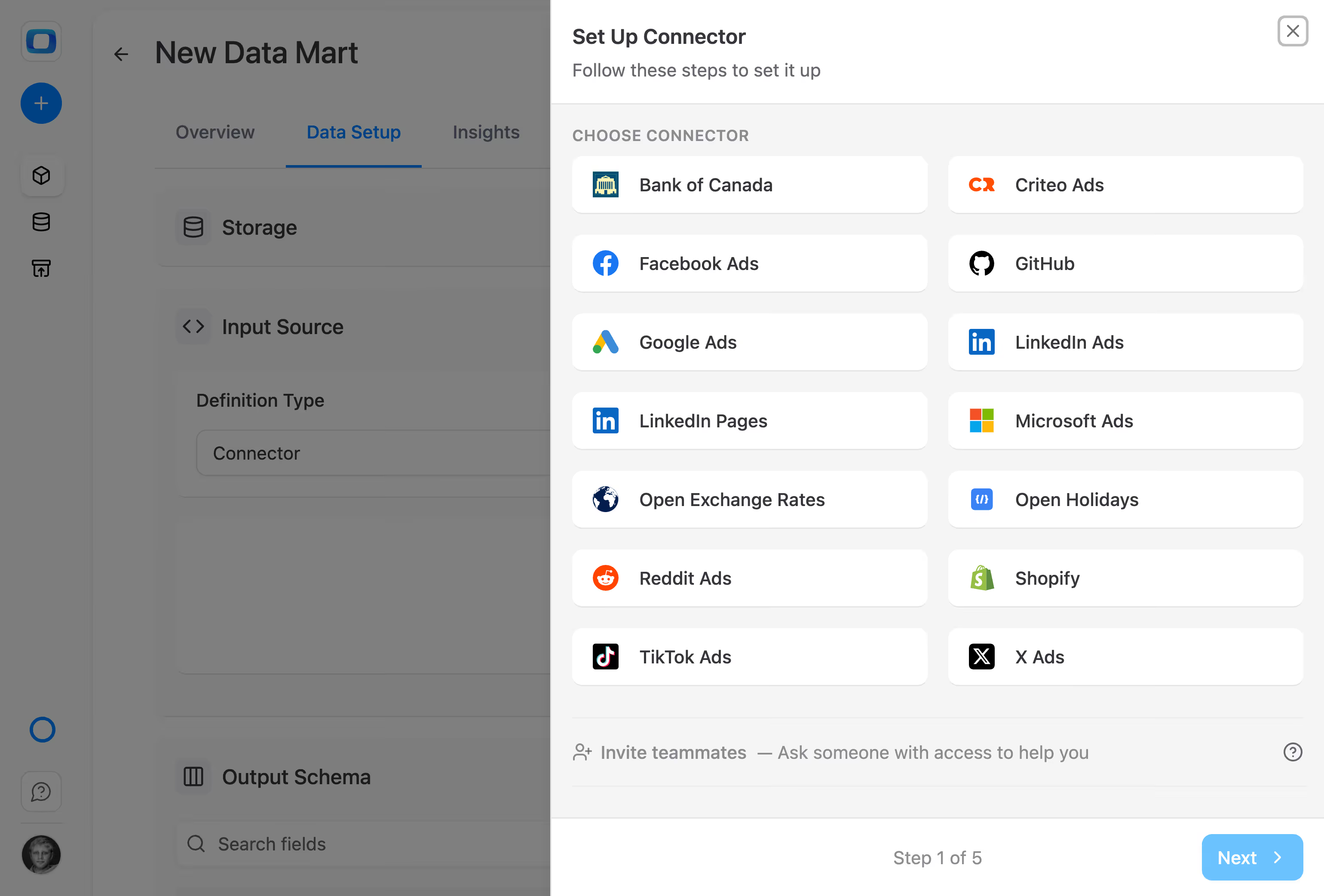
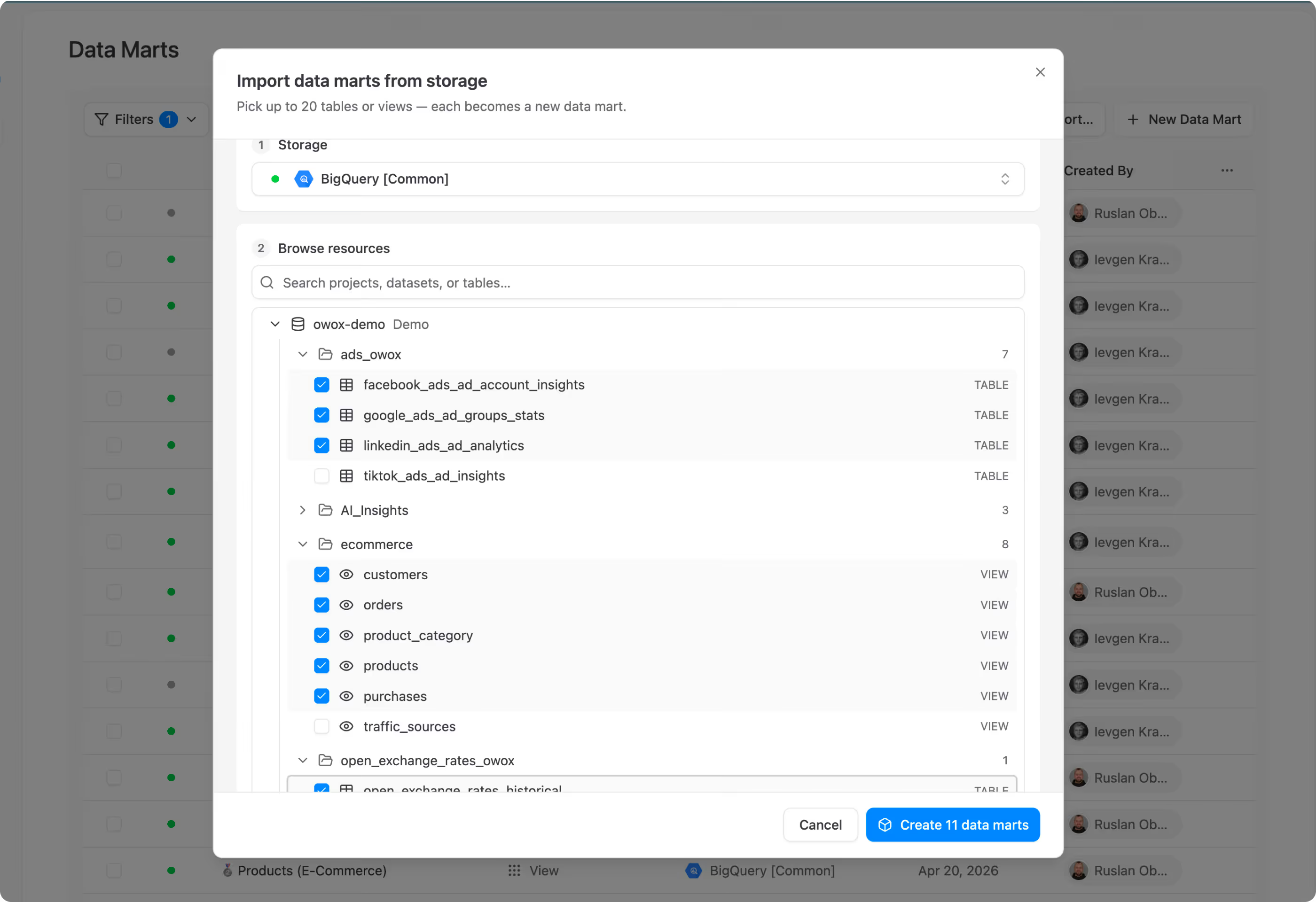

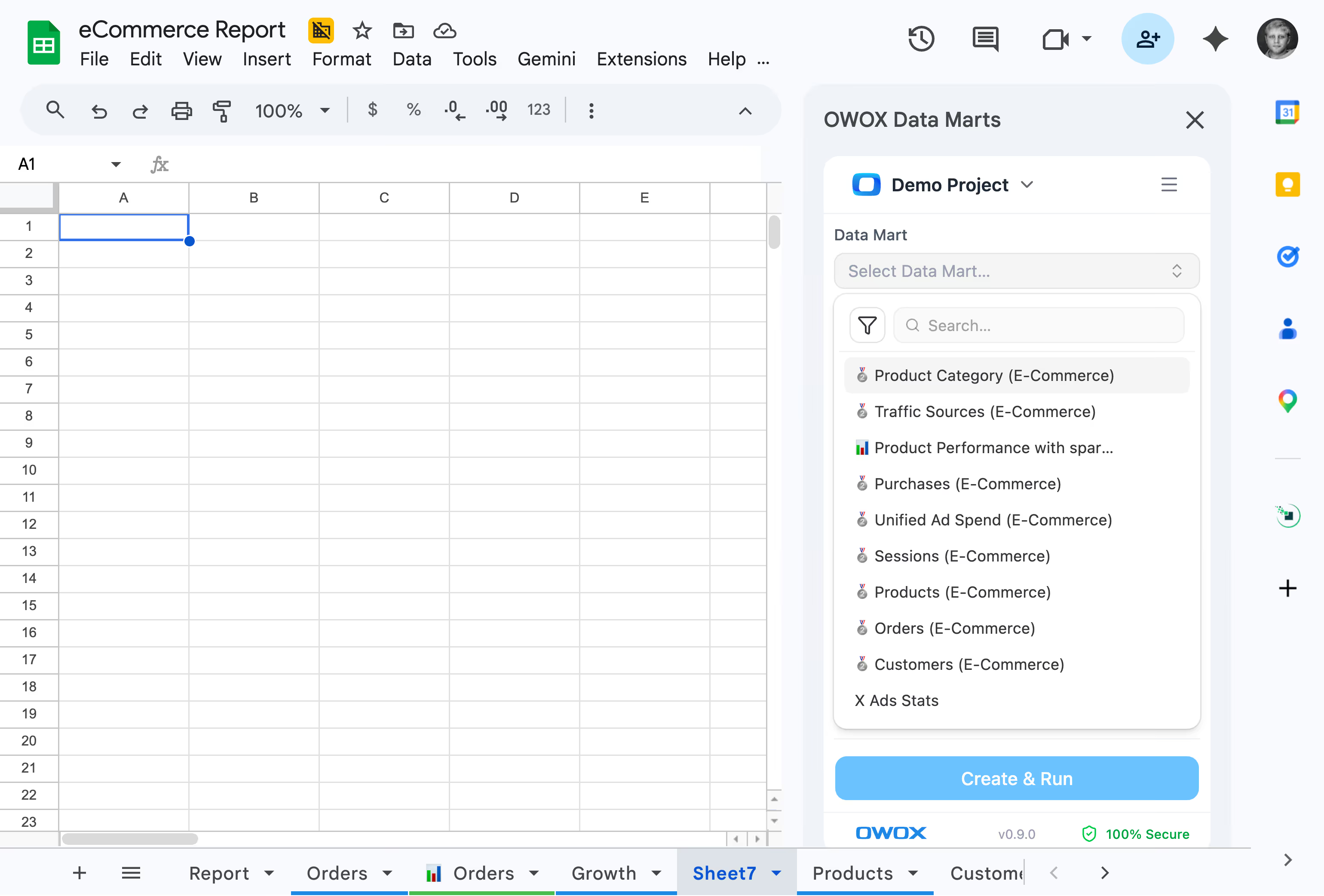
Once your ad data lands in the warehouse, OWOX turns it into a governed Data Mart library. Join Facebook Ads spend with Shopify revenue. Join TikTok campaigns with GA4 sessions. Every join is defined once, reused everywhere — no more Monday morning CSV stitching.

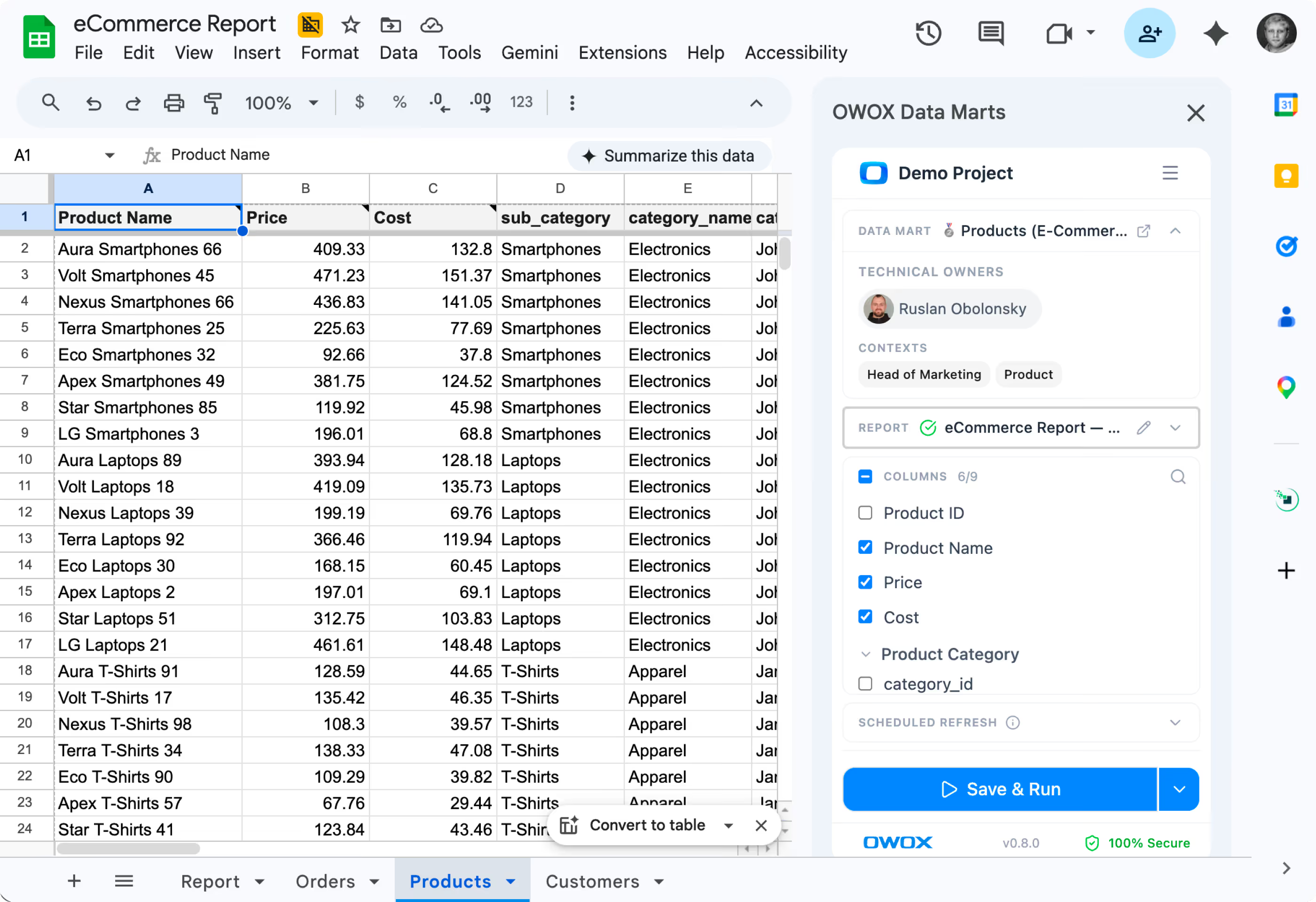
The OWOX sidebar puts your entire Data Mart library inside Google Sheets. Browse your campaign data, join ad spend with revenue by pre-defined keys, pick the columns you need, filter by platform or region, and schedule automatic refresh. You just became your own analyst.
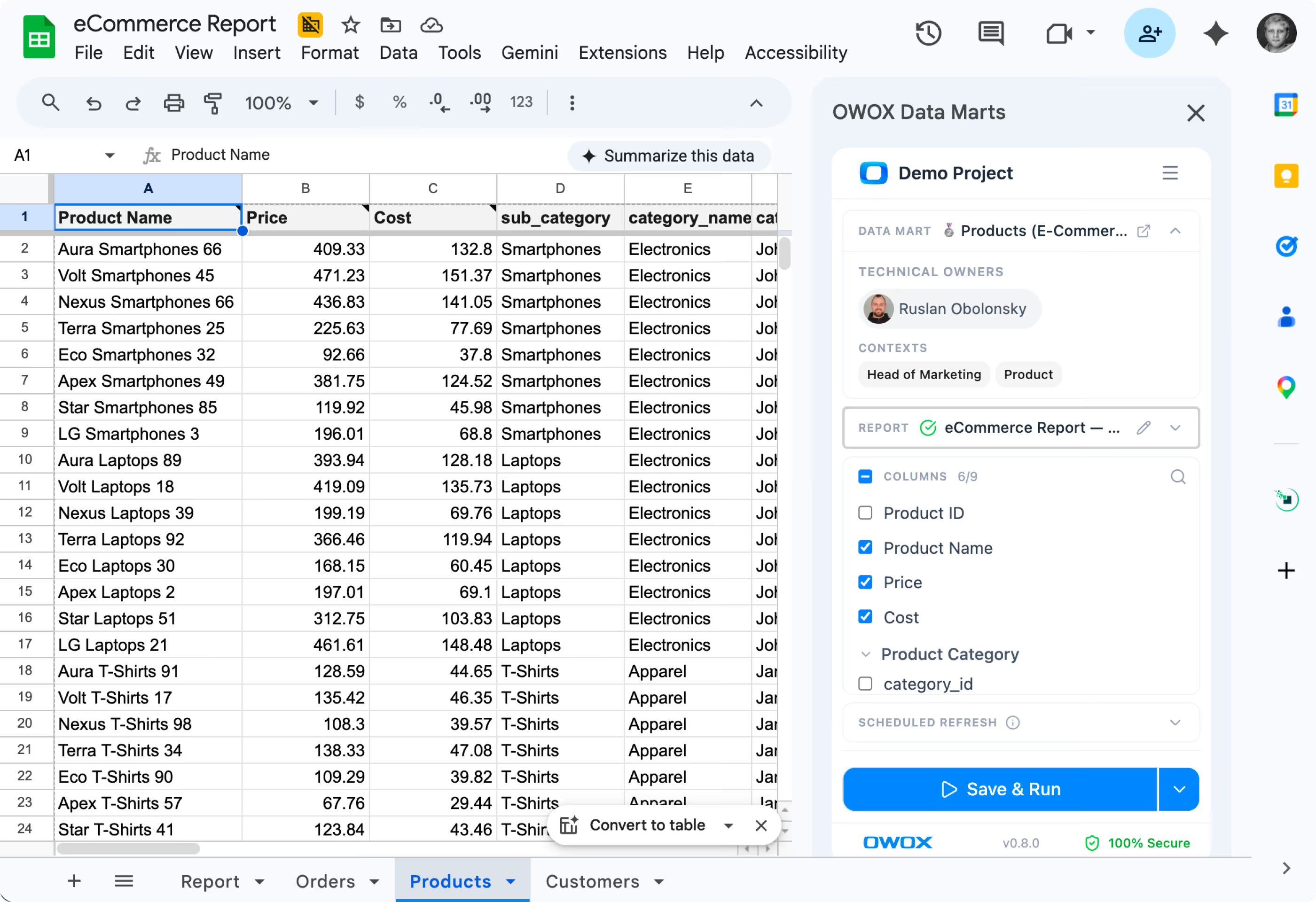

Connect your Facebook Ads and Google Ads accounts. Data lands in your warehouse. OWOX creates the Data Mart. You open Sheets, pick columns, and see cross-platform spend vs. revenue — side by side, for the first time, without a single CSV export.
You don't need a data engineering team. You don't need SQL. You need 15 minutes and $30/month. Here's how it works.
Pick your platforms — Facebook, TikTok, LinkedIn, Google. OWOX connectors pull data into your warehouse automatically.

OWOX creates governed Data Marts. Join ad spend with revenue or GA4 sessions. One definition, reused everywhere.
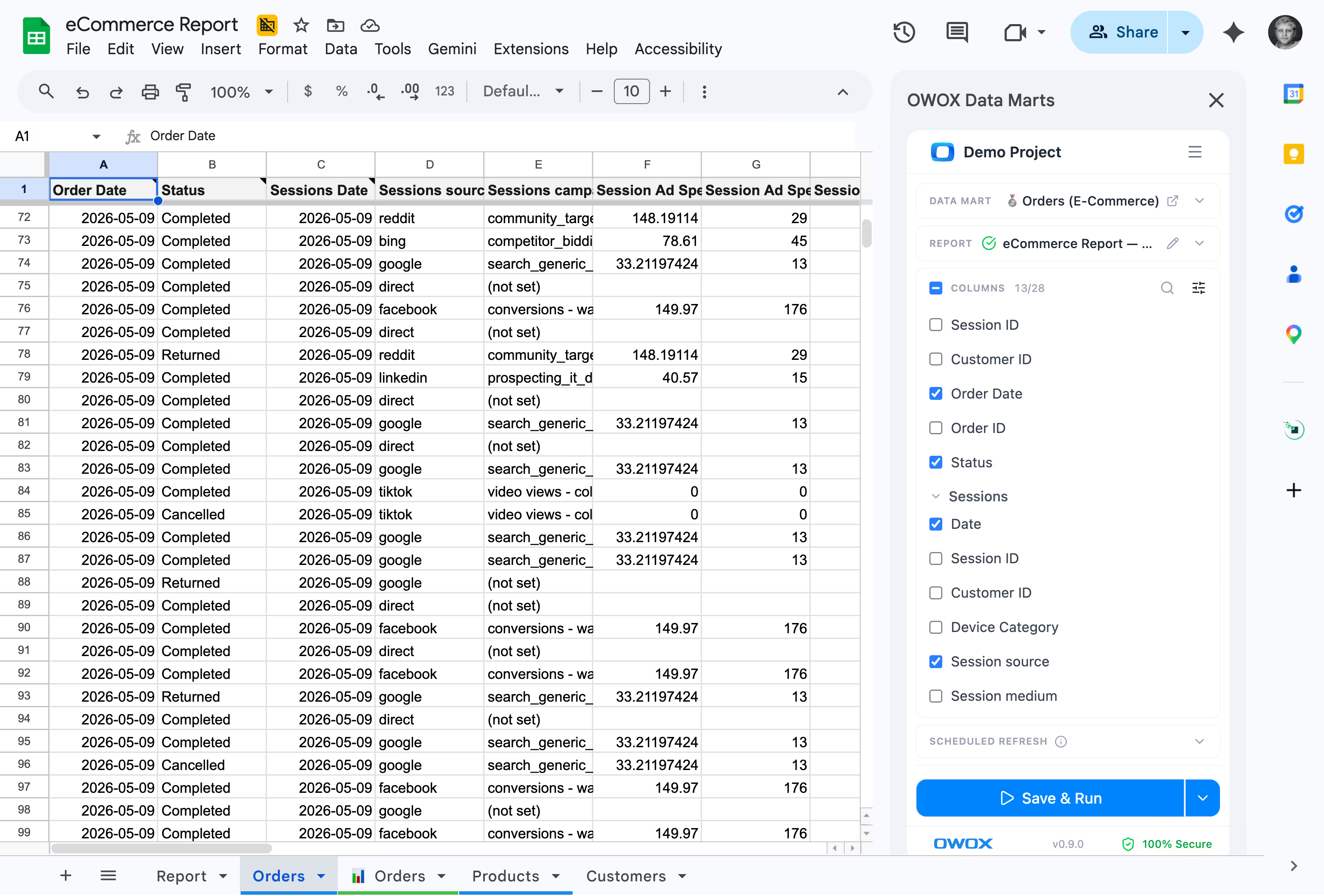
Browse the library in Sheets, pick columns, schedule refresh. Cross-platform performance report your CFO can trust.


When your data lives in a warehouse and your reports pull from governed Data Marts, everything changes.
When someone asks "should we cut TikTok spend?" — you pull up cross-platform ROAS joined with actual revenue, not platform-reported conversions. You answer in 30 seconds with numbers that reconcile.
Join ad platform data with your CRM and revenue systems in the warehouse. See which campaigns actually drove revenue — not which platform claimed credit.
The marketer who can pull cross-platform data in Sheets, show real ROAS, and defend budget allocation is the marketer who gets promoted. That's you now.
Marketing teams that stopped reporting platform numbers and started proving results
No. The connectors pull data automatically — you pick the platform and click connect. Data Marts can be created from your imported data with one click — OWOX auto-generates the schema, aliases, and join keys. When you need a report, you open Google Sheets, browse the Data Mart library with the column picker, and hit refresh. The entire flow from “I have ad accounts” to “I have a cross-platform report in Sheets” is point-and-click. If you want to go deeper — custom joins, calculated metrics, advanced transformations — you can write SQL. But you don’t have to start there, and many teams never need to.
Google Analytics tells you what happened on your website. It doesn’t tell you what happened across Facebook Ads, TikTok, LinkedIn, your CRM, and your revenue system — together. That’s the problem. When your CFO asks “what’s our real ROAS by channel?”, GA4 can’t answer because it only sees one slice. A data warehouse is the place where all your data lives together — ad spend from every platform, revenue from Shopify or Stripe, sessions from GA4 — joined, governed, and queryable. OWOX makes the warehouse practical for marketers: connectors pull the data in, Data Marts join it, and the Sheets Extension lets you self-serve. BigQuery has a generous free tier. You can start for $30/month total.
Facebook Ads (Meta + Instagram), TikTok Ads, LinkedIn Ads, Microsoft Ads (Bing), X Ads (Twitter), Reddit Ads, Criteo Ads, plus Open Exchange Rates for multi-currency reporting. Google Ads is on the roadmap. If you need a platform we don’t support yet, the connector framework is MIT-licensed — you can write a custom connector in Apps Script and plug it in. Every connector includes production-grade defaults: backfill, lookback windows, rate-limit handling, and automatic retry.
Supermetrics and Funnel pull raw data from ad platforms and dump it into Sheets or a warehouse. That’s where they stop. You still need to model the data, define metrics, maintain joins, and build reports from scratch. And every report is a separate sync — same data, duplicated logic, different numbers. OWOX goes further. Connectors pull data into your warehouse, then Data Marts govern it — aliases, join keys, ownership, descriptions. When a marketer opens Sheets, they don’t see raw API columns. They see “Cost per Acquisition” and “Revenue by Channel” in a column picker. They join ad spend with revenue data using pre-approved keys. One Data Mart feeds every report. Numbers reconcile because the definition is in one place. Supermetrics is a pipe. OWOX is a pipe plus a governed library plus a self-service column picker in Sheets.
Cloud Starter is $30/month — that includes connectors, Data Mart management, the Google Sheets Extension, and Looker Studio destination. For context, that’s less than one hour of a freelance analyst’s time. Team plans from $875/month add AI Insights (automated narrative reports to Slack/Teams/email), multi-destination delivery, multiple projects, and SLA. Enterprise is custom pricing with SSO, RBAC, and monitoring. If you want maximum control, the self-managed edition is free forever on your own infrastructure.
Even better. Your analyst connects the warehouse, builds the Data Mart library with proper governance and join keys, and publishes it. From that point on, you — and everyone on the marketing team — self-serve from the library in Google Sheets. Your analyst stops fielding “can you pull Facebook spend by campaign for last quarter?” tickets and starts working on actual analysis: attribution modeling, incrementality testing, media mix optimization. You get your data faster. They get their time back. The reporting backlog disappears because the hand-off is built into the product.
Connect your ad platforms, build your first cross-platform Data Mart, and self-serve in Google Sheets — in under 15 minutes. No SQL. No analyst required.
Walk through the platform with a data strategist. See how your ad data flows from connectors to warehouse to Sheets — with your actual platforms.